
Rooms used by many people
Shared lobbies, break areas, and restrooms need a named priority when responsibility crosses teams or tenants.
Illinois commercial cleaning
At 7:15 a.m., a Palatine building manager sees slush at the commuter-facing entry and full waste bins in the shared lobby before the first tenants reach their offices.
At the end of the day, a shared Palatine lobby may belong to everyone in theory and no one in practice. A visitor sees the entry glass, the floor near the door, and the seating area before they know which business occupies the building. When each group assumes someone else handles the common area, small misses remain until they become part of the first impression.
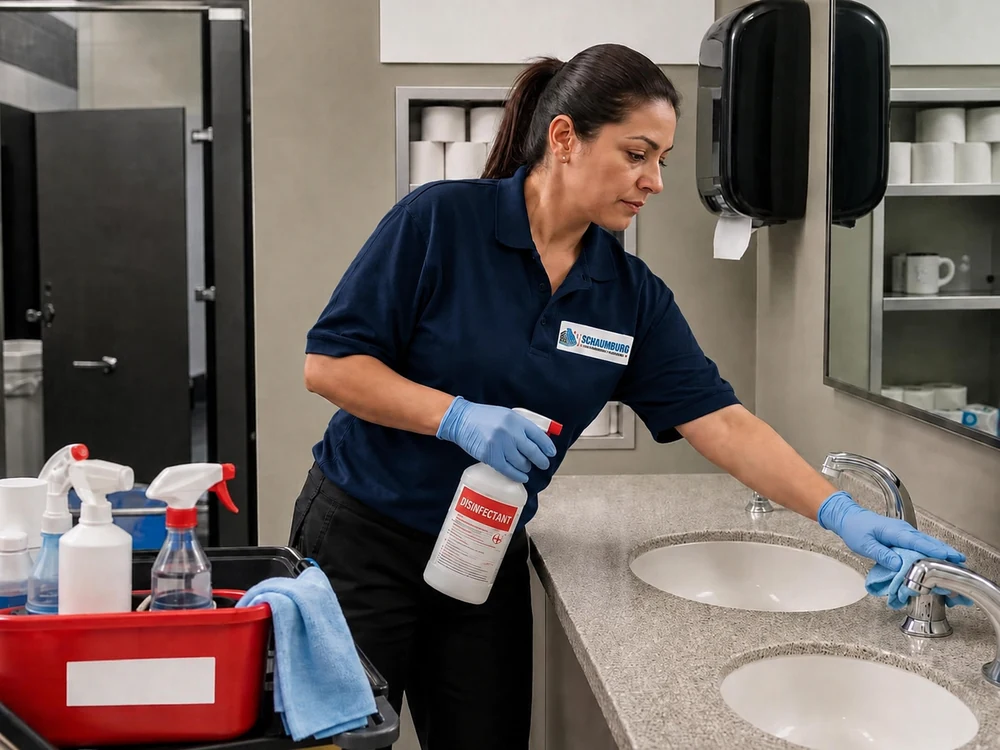
The same gap shows up in shared restrooms, break areas, corridors, and reception-adjacent spaces. These rooms have different users and different moments of pressure. A break area may need attention after a concentrated lunch period. A corridor may carry steady traffic without appearing on any one department’s list. A restroom may be open to several groups but require an agreed access contact. Treating those rooms as an afterthought leaves the most visible parts of a building without a clear standard.
Schaumburg Commercial Cleaning works from the rooms a facility owner or authorized contact identifies. The starting details are practical: which shared areas matter most, what use they receive, when they are open, and who confirms a change in access. The work list stays limited to the rooms and boundaries the facility authorizes. It does not assume a tenant arrangement, property-management role, medical setting, or specialized service outside those accessible areas.
A good shared-area arrangement also separates daily priorities from periodic detail. Entry floors, waste points, and common restrooms often need regular attention. Interior glass, overlooked corners, or a room reset may belong on a separate detail list. Giving each type of work its own place keeps the routine from swallowing every deferred item and gives the facility contact a clearer record of what matters when building use changes.
Morning arrivals make the shared-area standard easy to test. One tenant may open before another, visitors may pass through before staff gather, and a lobby waste point may fill long before a private office needs attention. A short room-by-room record keeps those differences visible. It gives the authorized facility contact a direct way to identify the common areas that matter first without assuming the same timing or task list fits every occupant. The result is a lobby standard tied to actual shared use, not a generic building promise.
Shared-area standards
A shared commercial building does not need one identical task list for every room. Visitor-facing spaces, staff areas, and routes between them each carry a different role. Naming that role helps the facility contact decide where regular attention belongs and where a separate detail item makes more sense.
Shared lobbies, break areas, and restrooms need a named priority when responsibility crosses teams or tenants.
Entries, corridors, and common floors connect the building’s shared spaces and deserve their own standard.
A new use pattern, access rule, or occupancy change is a reason to review the rooms and priorities.
The facility owner or authorized contact decides which rooms are included. Areas that need separate authorization remain outside the work list until that approval is given.
A workable shared routine
A written room list gives recurring priorities a home and keeps deferred detail items visible instead of folding them into a vague request.
Related facility needs
Shared-area priorities often lead to a more specific question about recurring room care, visible floor paths, office traffic, or nonclinical common areas. These routes keep that next step tied to the space involved.
See how regular attention to waste points, restrooms, and shared rooms fits a recurring work list.
Review the broader service for facilities balancing recurring priorities with separate detail work.
Explore entry paths, common corridors, and surface needs shaped by visible traffic.
Read about reception, meeting rooms, workspaces, and shared office areas with changing use.
Read the limited service information for owner-authorized, nonclinical reception, waiting, restroom, and staff common areas.
Commercial cleaning options
Explore the full range of commercial cleaning services available for facilities in and around Palatine. Each service page explains the scope, planning approach, and facility needs it can support.
Complete commercial cleaning for offices, shared workspaces, and customer-facing facilities.
Explore Commercial CleaningRecurring janitorial service with written checklists, dependable schedules, and accountable quality checks.
Explore Janitorial ServicesFloor care that protects high-traffic hard surfaces, carpet, entrances, and common areas.
Explore Floor CareDetailed commercial deep cleaning for neglected areas, seasonal resets, and high-touch spaces.
Explore Deep CleaningPost-construction cleaning that removes dust, debris, residue, and final-detail issues before occupancy.
Explore Post-Construction CleaningInterior commercial window cleaning for clearer views, cleaner entrances, and a stronger first impression.
Explore Window CleaningOffice cleaning designed around workdays, meeting spaces, restrooms, break rooms, and shared touchpoints.
Explore Office CleaningIndustrial cleaning for active facilities that need planned, safety-aware support around operations.
Explore Industrial CleaningFacility-focused support
Explore industry pages for the facility types and customer-facing environments that may need commercial cleaning support in Palatine.
Restaurant cleaning that supports clean dining rooms, restrooms, kitchens, and guest-facing details.
Explore RestaurantsOffice cleaning for healthier, more presentable workplaces and shared spaces.
Explore OfficesMedical facility cleaning for professional, carefully maintained nonclinical spaces.
Explore Medical FacilitiesRetail and shopping center cleaning for entrances, aisles, restrooms, and common areas.
Explore Retail and Shopping CentersSchool and daycare cleaning for classrooms, restrooms, hallways, and high-touch spaces.
Explore Schools and DaycaresFinancial institution cleaning for polished lobbies, offices, restrooms, and customer areas.
Explore Financial InstitutionsAuto dealership cleaning for showrooms, service lounges, offices, and customer-facing spaces.
Explore Auto DealershipsSalon and spa cleaning for fresh, welcoming treatment, reception, restroom, and retail areas.
Explore Salons and SpasFitness center and gym cleaning for locker rooms, equipment areas, entrances, and restrooms.
Explore Fitness Centers and GymsDiscuss your Palatine facility
Share the facility type, shared priority areas, preferred timing, and approximate size. Schaumburg Commercial Cleaning will keep the conversation focused on owner-authorized rooms and the standards that matter to the people using them. Call (224) 451-1319 to begin.