
Visible routes first
Give customer entries, reception points, restrooms, and shared corridors a clear place on the regular list.
Illinois commercial cleaning
At 7:35 a.m., a Hoffman Estates facilities manager sees salt tracks across the office lobby and smudges on the retail-entry glass before the first visitors arrive.
A receiving door, a storage-adjacent corridor, and a customer entrance do not carry the same expectations. In an active Hoffman Estates facility, a path that supports deliveries or staff movement may meet the same building at a point visitors use first. When those routes overlap, the visible condition of the customer path needs a defined priority instead of competing with every task behind the scenes.
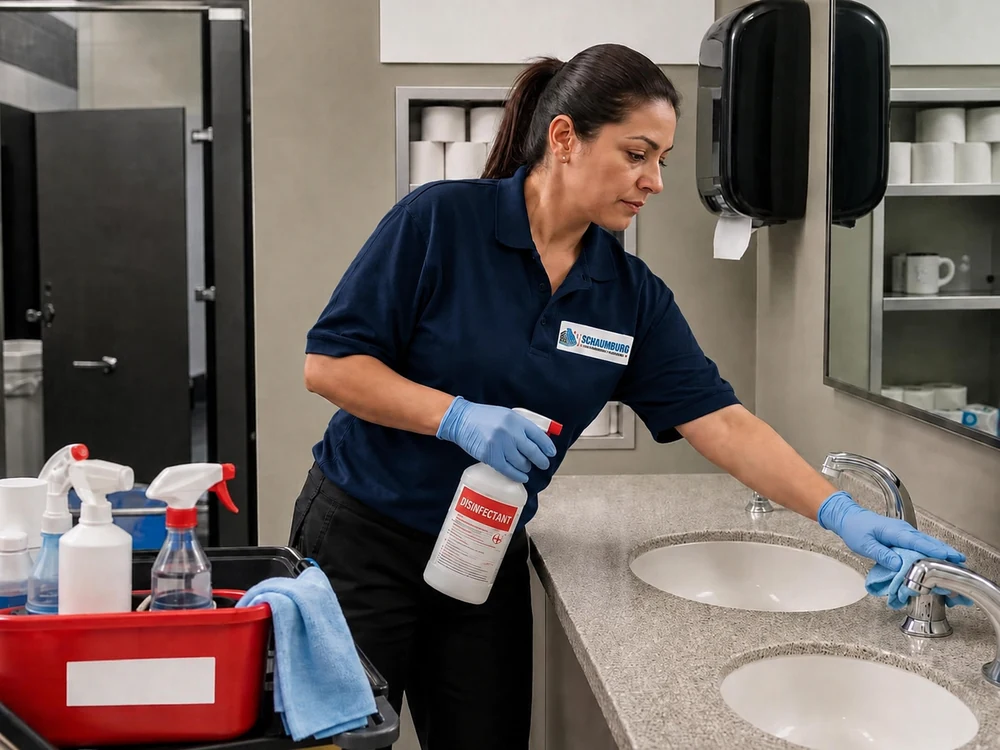
Entrances, reception points, restrooms, shared corridors, and office-adjacent rooms often shape the experience of guests and staff. Storage-adjacent areas, equipment zones, and active work spaces may have different access limits. A facility owner or authorized contact identifies where ordinary commercial cleaning applies and where the boundary remains. That distinction protects the work list from drifting into spaces that need separate approval or fall outside a normal commercial arrangement.
Schaumburg Commercial Cleaning begins with the rooms that are authorized and the moments when those rooms are open. The details matter: a customer path may need attention before a public arrival, while a shared break area may be open only after staff use slows. A listed room, its role, the preferred timing, and the access contact give the facility a practical way to state expectations without pretending every square foot belongs to the same routine.
Regular room care and periodic detail work should remain separate. High-traffic entries, visible floors, waste points, and restrooms may belong on the recurring list. Interior glass, a less-used shared room, or an accumulated detail item may need its own scheduled review. Separating the two prevents daily pressure from erasing work that still matters and gives the facility contact a clear basis for a later update.
Building use changes over time. A storage route may move, a waiting area may become busier, or a room’s access window may tighten. The written priorities need an update when that happens. The aim is a direct, owner-authorized list of accessible rooms and task boundaries, not an assumption about a Hoffman Estates business, its hours, its customers, or its operations.
A facility-first standard
Offices, auto dealerships, retail locations, and other active commercial facilities use rooms and routes differently. The useful details are the visible paths, authorized spaces, timing limits, and people who direct access. Hoffman Estates is the service-area label; the building’s actual use determines the work list.
Room-by-room clarity
A short, direct room list keeps customer-facing paths, recurring needs, and periodic detail work from competing without a clear order.
What keeps the list useful
A commercial facility works better from stated facts than from a generic service promise. The contact identifies the rooms, the access limits, and the points where a change in traffic or use should alter the written priorities.
Give customer entries, reception points, restrooms, and shared corridors a clear place on the regular list.
Leave active zones, equipment areas, and rooms requiring separate approval outside the authorized work.
Use the facility’s designated contact to confirm access changes, room use, and shifting priorities.
Service routes
A specific room or visible condition often points to a more useful service conversation. These pages separate recurring room care, floor traffic, glass, periodic detail, and owner-authorized commercial areas.
Start with facilities balancing shared workspaces, customer-facing rooms, and regular attention.
Explore Commercial CleaningSee recurring priorities for shared rooms, restrooms, waste points, and workplace routes.
Explore Janitorial ServicesFocus on entries, visible traffic lanes, carpeted areas, and common floors.
Explore Floor CareKeep accumulated detail work separate from a regular room-care list.
Explore Deep CleaningReview accessible commercial areas after a project handoff and owner authorization.
Explore Post-Construction CleaningConsider accessible interior glass, entry doors, and customer-facing panes.
Explore Window CleaningRead about workday changes across reception, meeting rooms, break areas, and restrooms.
Explore Office CleaningReview the boundaries for accessible, nonregulated support areas around operations.
Explore Industrial CleaningIndustry settings
A room’s role changes with the setting. These pages address customer routes, shared spaces, access limits, and the owner-authorized commercial areas relevant to each facility type.
Read about guest routes through accessible dining, restroom, waiting, and entry areas.
Explore RestaurantsSee the changing priorities across reception, workspaces, meetings, and shared rooms.
Explore OfficesReview owner-authorized, nonclinical reception, waiting, restroom, and staff common areas only.
Explore Medical FacilitiesFollow the customer route from the entry through aisles, common areas, and restrooms.
Explore Retail and Shopping CentersRead about owner-authorized classrooms, hallways, restrooms, and staff areas.
Explore Schools and DaycaresReview accessible public lobbies, offices, restrooms, and customer areas while keeping restricted rooms outside the work.
Explore Financial InstitutionsSee customer-facing showrooms, service lounges, offices, and authorized shared spaces.
Explore Auto DealershipsRead about reception, accessible customer areas, restrooms, and retail display paths.
Explore Salons and SpasReview accessible entries, locker rooms, restrooms, studios, and customer routes.
Explore Fitness Centers and GymsDiscuss your Hoffman Estates facility
Share the facility type, priority rooms, visible traffic paths, preferred timing, and approximate size. Schaumburg Commercial Cleaning will keep the conversation grounded in owner-authorized areas and clear task limits. Call (224) 451-1319 or use the form to share the details.