Entry and reception
Doorways, waiting areas, reception points, visible interior glass, and first customer paths receive attention because visitors meet them first.
Illinois commercial cleaning
At 8:25 a.m., an Arlington Heights office manager sees coffee rings in the waiting area and fingerprints on the conference-room glass before the first downtown client appointment.
A client visit does not begin at the conference-room table. It begins at the entrance, moves through reception and a waiting area, and often passes interior glass, shared corridors, and a restroom before the meeting starts. In an office suite or customer-facing facility, those spaces gather traffic from staff and visitors on different schedules. A room used by the public for ten minutes may carry more visibility than a private room used all afternoon.
An Arlington Heights facility sets its own boundaries around the rooms that are open for access. The room list may include entry flooring, reception surroundings, waiting space, visible interior glass, shared corridors, guest restrooms, break areas, meeting rooms, and authorized workspaces. Private offices, records areas, storage, and any restricted room stay outside the list unless the facility identifies access and timing.
The aim is not to give every room the same attention. It is to recognize the difference between the route a client sees, the places staff share, and the rooms that have limited availability. A marked entry path before a meeting creates a different problem from a closed office or a quiet back room.
Arrival and meeting rhythm
A professional suite, storefront office, shared building, or customer-service facility has its own traffic rhythm. The entry may be busiest before appointments. Reception may be quiet during a meeting and active immediately afterward. A conference room may be unavailable until the next opening. The facility knows those patterns and determines which areas are authorized.
Doorways, waiting areas, reception points, visible interior glass, and first customer paths receive attention because visitors meet them first.
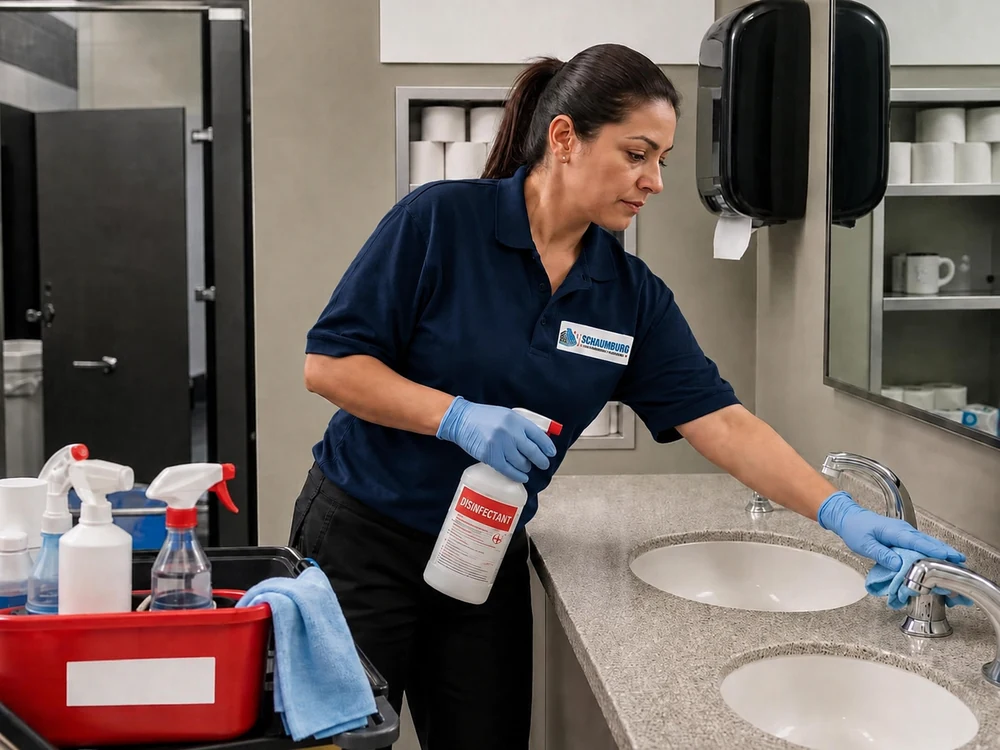
Guest restrooms, break areas, common corridors, and meeting rooms may serve several groups, each with a different access window.
Private work areas belong only where the facility opens them and identifies the timing that fits the workday.
Recurring needs and periodic detail items should remain distinct. A waiting room used every day has a different rhythm from a conference room that changes use or a customer route that becomes busier during a seasonal period. The facility retains control of the accessible rooms and their order of priority.
A receptionist may have only a few minutes between appointments to see whether the entry, visitor seating, interior glass, and guest restroom still match the standard expected by the next client. Meanwhile, a conference room may stay closed until the prior meeting ends, and staff may still be using a break area. That difference is why the visitor route, shared spaces, and private work areas need separate treatment. The facility decides which rooms are accessible and when they fit the day's activity.
The handoff between a departing visitor and the next appointment is often the tightest part of the day. A chair moved in the waiting area, a marked glass panel, or a guest restroom near the lobby becomes visible in that short interval. Keeping those touchpoints distinct from private workspaces helps the facility maintain the right order without interrupting an active meeting or treating every room as equally urgent. It also keeps the receptionist’s visible priorities from disappearing behind a closed door or a later task.
Built around the visit
The best room list follows the way clients arrive, the rooms staff share, and the access rules the facility sets.
Related guidance
These pages help organize accessible entry, office, interior-glass, and shared-area priorities without relying on unsupported local claims.
Organize workspaces, meeting rooms, reception, break areas, and shared office routes around their use.
Address accessible interior glass and entry-facing panes with room-specific access limits.
Follow the customer path from the door through customer-facing and shared commercial space.
Set recurring room priorities and separate periodic detail work across a commercial facility.
Commercial cleaning options
Explore the full range of commercial cleaning services available for facilities in and around Arlington Heights. Each service page explains the scope, planning approach, and facility needs it can support.
Complete commercial cleaning for offices, shared workspaces, and customer-facing facilities.
Explore Commercial CleaningRecurring janitorial service with written checklists, dependable schedules, and accountable quality checks.
Explore Janitorial ServicesFloor care that protects high-traffic hard surfaces, carpet, entrances, and common areas.
Explore Floor CareDetailed commercial deep cleaning for neglected areas, seasonal resets, and high-touch spaces.
Explore Deep CleaningPost-construction cleaning that removes dust, debris, residue, and final-detail issues before occupancy.
Explore Post-Construction CleaningInterior commercial window cleaning for clearer views, cleaner entrances, and a stronger first impression.
Explore Window CleaningOffice cleaning designed around workdays, meeting spaces, restrooms, break rooms, and shared touchpoints.
Explore Office CleaningIndustrial cleaning for active facilities that need planned, safety-aware support around operations.
Explore Industrial CleaningFacility-focused support
Explore industry pages for the facility types and customer-facing environments that may need commercial cleaning support in Arlington Heights.
Restaurant cleaning that supports clean dining rooms, restrooms, kitchens, and guest-facing details.
Explore RestaurantsOffice cleaning for healthier, more presentable workplaces and shared spaces.
Explore OfficesMedical facility cleaning for professional, carefully maintained nonclinical spaces.
Explore Medical FacilitiesRetail and shopping center cleaning for entrances, aisles, restrooms, and common areas.
Explore Retail and Shopping CentersSchool and daycare cleaning for classrooms, restrooms, hallways, and high-touch spaces.
Explore Schools and DaycaresFinancial institution cleaning for polished lobbies, offices, restrooms, and customer areas.
Explore Financial InstitutionsAuto dealership cleaning for showrooms, service lounges, offices, and customer-facing spaces.
Explore Auto DealershipsSalon and spa cleaning for fresh, welcoming treatment, reception, restroom, and retail areas.
Explore Salons and SpasFitness center and gym cleaning for locker rooms, equipment areas, entrances, and restrooms.
Explore Fitness Centers and GymsTalk through the facility
Tell us the facility type, priority rooms, preferred timing, and approximate size. You may also call Schaumburg Commercial Cleaning at (224) 451-1319.